Explore
Le Palais
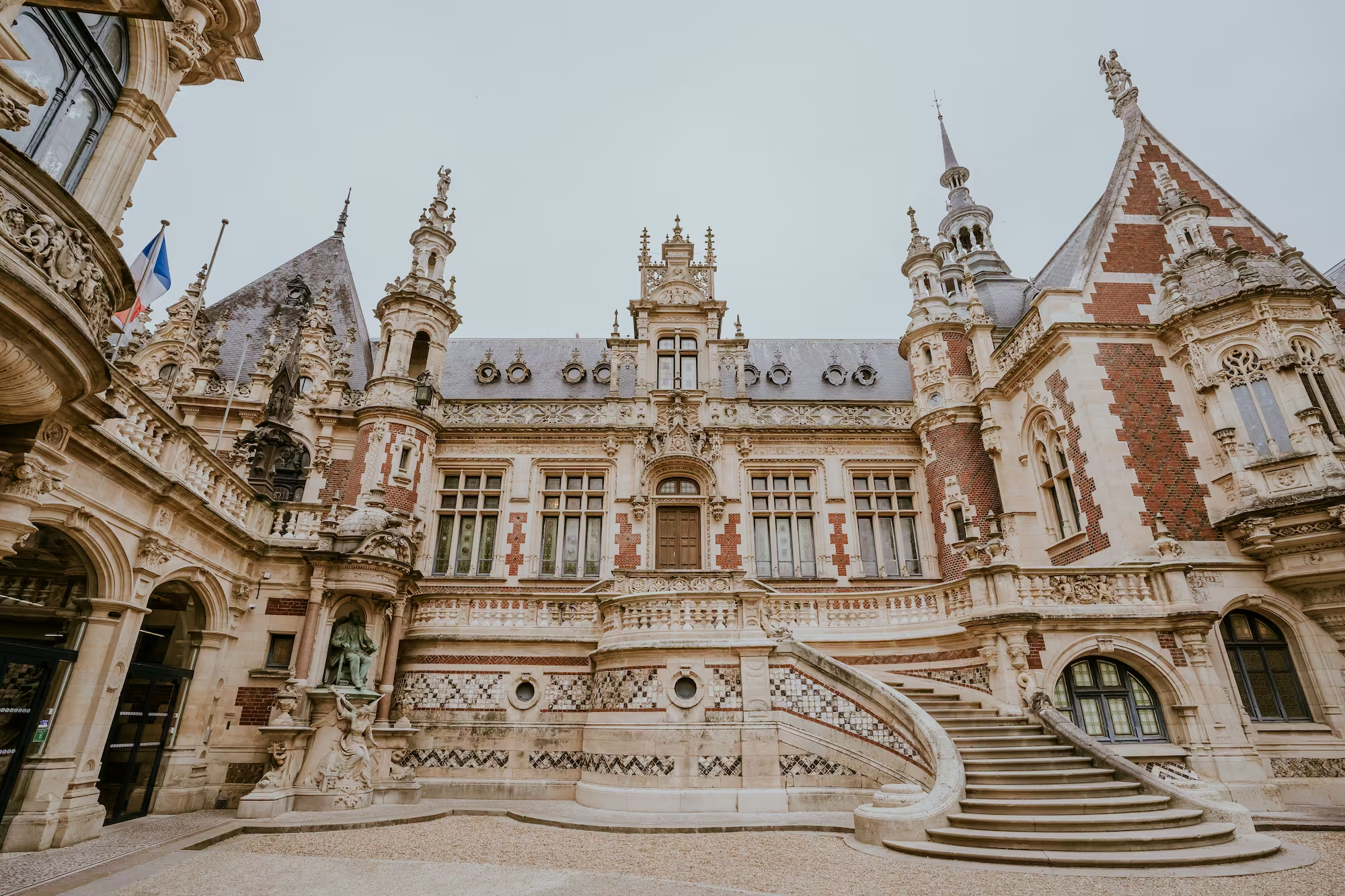
Conceived as far more than a place of production, le Palais Bénédictine can be discovered as a work of art in its own right, where every detail tells a story.
Discover
A Palace between industry and creation
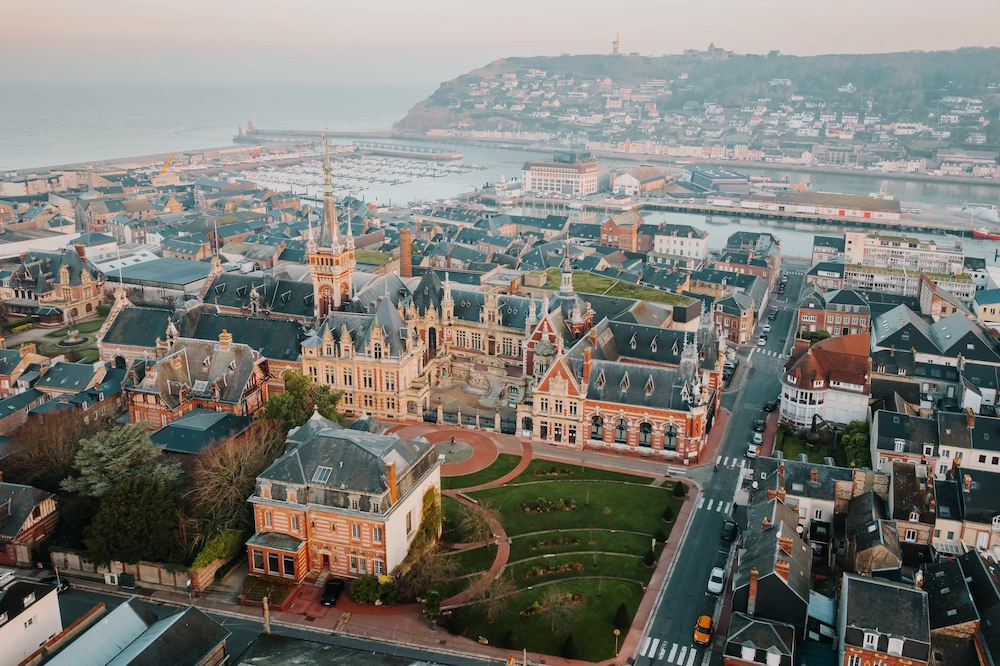
An emblematic monument of the Fécamp landscape, le Palais Bénédictine, a pioneer of industrial tourism, evokes as much memory as curiosity. Alexandre Le Grand, founder of Bénédictine, imagined a singular building, designed as a distillery, a museum and a place open to the public all at once.
Origins
Alexandre Le Grand and Camille Albert
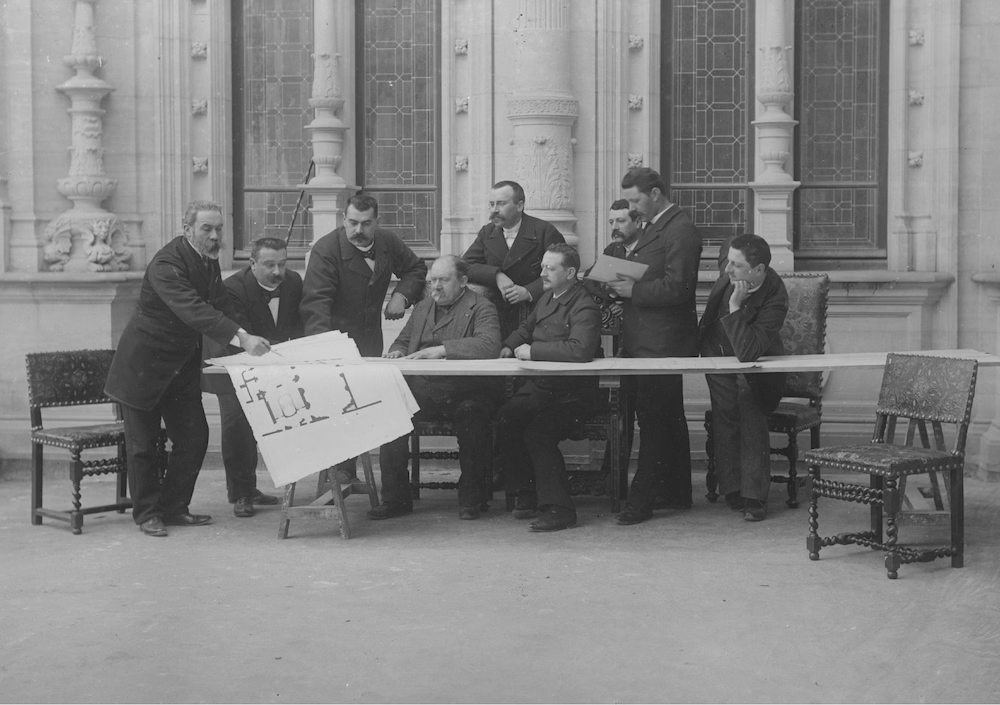
While the statue of Alexandre Le Grand proudly welcomes visitors at the entrance to the hall, the imprint left by Camille Albert, le Palais’ architect, can be seen in every detail of the building. Yet it is these two figures together that gave birth to a truly distinctive architecture at le Palais, born from the meeting of an ambitious industrial vision and a clear artistic approach.
History
An ever-evolving project
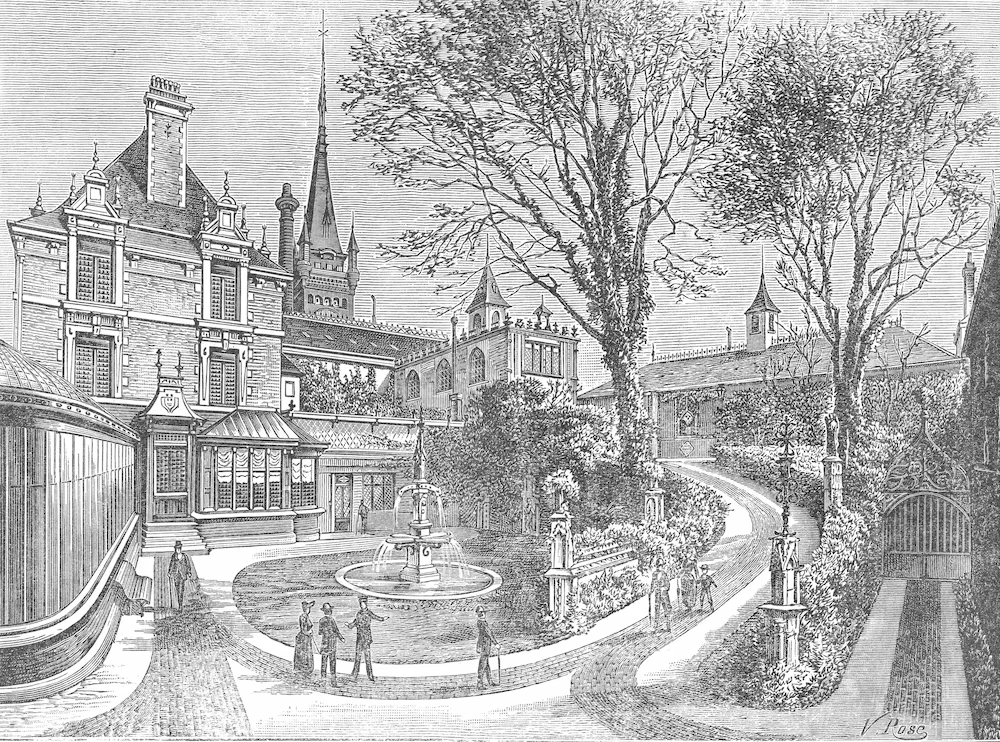
Le Palais’ architecture is striking. It differed from the industrial standards of the time and was, in fact, the result of several redesigns. The first production site quickly became unsuitable in the face of the exponential success of Bénédictine liqueur.
New plots of land were then acquired on the port and, in 1882, Alexandre Le Grand first called upon Camille Albert to carry out expansion work before entrusting him with a much larger project. The new complex was inaugurated in 1888, before being destroyed four years later by a devastating fire.
Reconstruction
The ambition of a Palace-factory
“Bénédictine is not dead; I will prove it!”
With these words, Alexandre Le Grand affirmed his determination to continue the adventure and rebuild. Once again working with Camille Albert, he embarked on an even more ambitious project. Asked about his choice of a palace-factory, he explained that the Gothic style evokes tradition, while Renaissance influences bring lightness and elegance. For him, it was not simply about building a factory, but about giving his activity a setting worthy of its identity.
Architecture
A unique style, between heritage and imagination
Camille Albert drew inspiration from several sources: the Norman Renaissance, the châteaux of the Loire Valley, as well as certain elements evoking Flemish architecture, particularly through the belfry. This blend of references gives le Palais a unique silhouette, both coherent and distinctive.
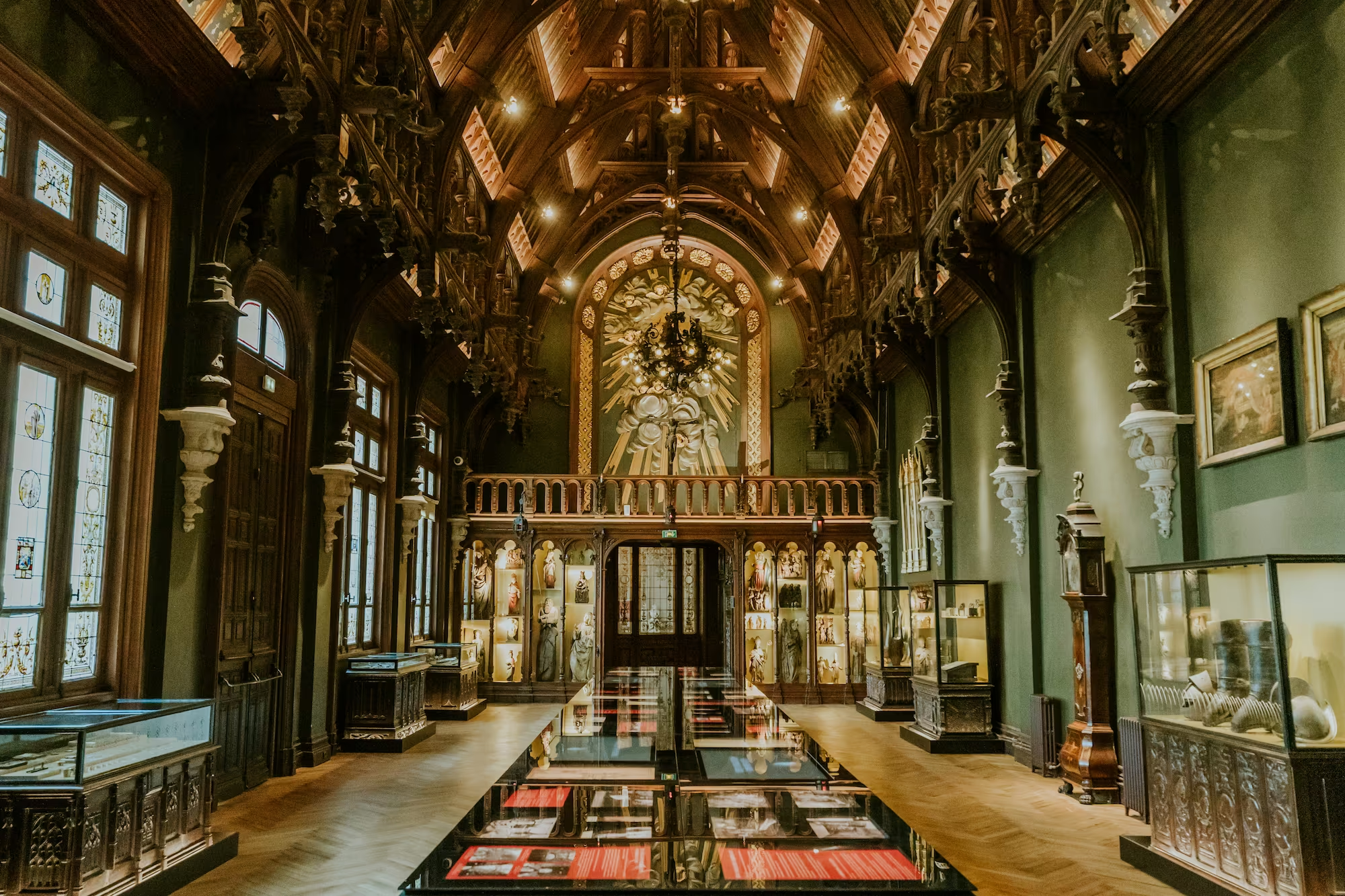
The interior architecture extends this richness. Beyond the production spaces, the museum rooms invite visitors on a journey through time, from the Middle Ages to the Renaissance and on to the 19th century. Decor, collections and scenography all contribute to creating an immersive experience, echoing the identity of the place.
Le Palais Bénédictine fascinates and leaves a lasting impression. Its architecture reveals itself gradually, and each visit unveils new details. Between heritage, creation and imagination, it continues to inspire and amaze those who step through its doors.
Book your visit to le Palais Bénédictine
Plan your visit to Fécamp and choose the experience that suits you best.